Monday, 12 January 2015

Rusty pots

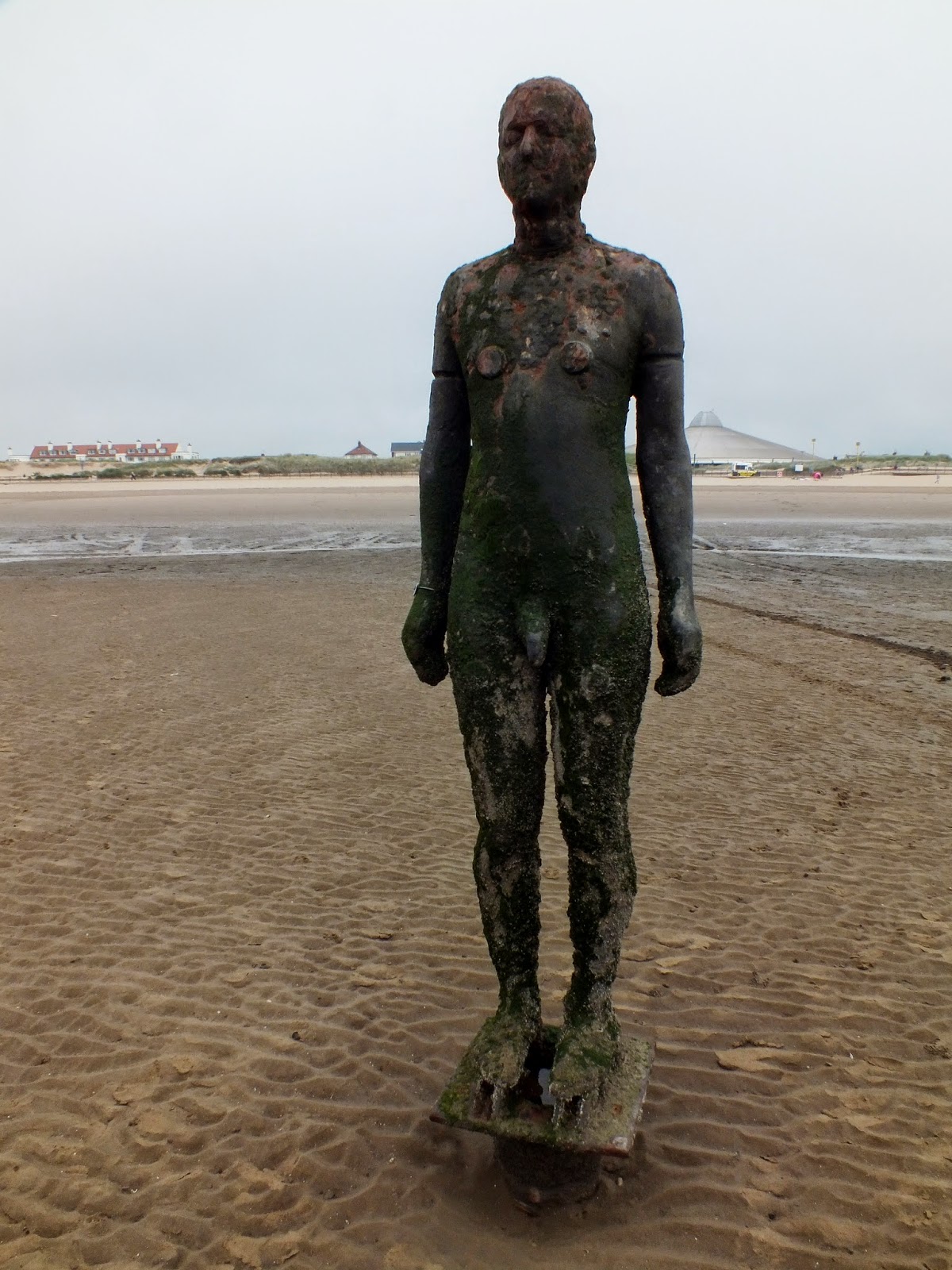
A lot of my current designs are involving rusty ceramic surfaces which I create using slip, underglaze and a lot of iron oxide, which is essentially rust. These designs have been inspired by numerous photographs of rusty surfaces created by the sea - mainly from the Iron Men at Crosby beach. 


Here are some experiments I've been working on recently. I think they need more work than the pieces I've posted previously, which were inspired by barnacles. I'm not unhappy with these experiments but I can certainly see ways of improving them. 


At the moment, I'm finding the oxides to be a bit unpredictable and this has meant some of my results haven't come out quite as bold as I'd imagined. For instance, the piece above is a very toned down colour scheme compared to what I'd designed and anticipated. Anyone studying ceramics expects these kinds of hiccups, so thankfully these results haven't been too discouraging. 


Although some of the surfaces weren't what I originally had in mind, I've got ideas on how to improve the problems and will have a busy few weeks making more vessels and testing things such as heavier applications of slip and oxides. 

Portobello Beach, Edinburgh

Recently, I spent a weekend in Edinburgh. We visited endless galleries as well as vintage and antique shops, so generally, the trip was really inspirational. 


Being a lover of the sea, I spent a morning at Portobello beach which is along the coast of the Firth of Forth. The beach has several prominent wooden groynes, which are designed to stop erosion. On these I found some fantastic, really beautiful natural surfaces - mainly rust and barnacles created by the ocean. 


I'm currently using these images in my design work and creating pieces inspired by them. The surfaces are so rich and interesting, I've got endless things to test and try out. Here's a sneak peak from my sketchbook, showing just a few ideas and how I've used the photographs to influence my designs. 


I'm really enjoying the design process, combining the eroded surfaces with my family photographs and trademark nostalgic imagery from the Great British seaside. I'm looking forward to doing more tests with slip, oxide and underglaze and getting some pieces made which were inspired by my visit to Scotland. 

Glaze, oxide and underglaze...

These are the pieces from my last post. They have now been glazed and covered in oxides to help create an decayed surface, inspired by erosion from the ocean. 


Generally, I'm really happy with these results. Some need a bit of refinement, especially with the (bright blue) cobalt oxide. I will definitely be using more copper oxide (green) to create more natural shades and to stop the blue being quite as striking. 


Opening a kiln in sometimes really nerve-wracking so I'm really happy to have some tests I'm pleased with, finally! I'm excited to create these surfaces on larger vessels and refine all of the techniques I've experimented with. 


If you're interested in adding colour to ceramic surfaces or just want to know more about the processes involved, here are some useful, informative links:  


Saturday, 10 January 2015

Test tiles to vessels...


A few results I'm happy with and want to develop


I've started to use the successful techniques on small test pieces


Bisque fired vessels -
I'm excited to see the surface results after oxides, underglaze and glaze have been applied


Seaside Erosion

These images show part of my current design process, which originated from some photographs I took at Crosby Beach, otherwise known as "Another Place" by Antony Gormley. "Another Place" consists of 100 cast-iron, life-size figures stretched along the coastline and into the sea.


The pieces explore man's relationship with nature - tested by tide and time. The "Crosby Iron Men" are a permanent feature on the beach, constantly exposed to all weather conditions, light and the ocean. They are ever-changing and at the sea's mercy, which has resulted in beautiful natural surfaces covering the cast-iron surface.

The Iron Men are spectacular as an installation, but what makes them inspiration to me is how the sea has made each one unique. They began as 100 identical sculptures and now each one is beautiful in its own right, constantly changing season by season and in different lights.

A close-up I took of one Iron Man's surface

Oxides and underglaze before the glaze firing

Bisque fired tile with texture and coloured slip

Oxides and underglaze added

The finished test tiles

The images above show some tests I've been working on and now intend to develop onto vessel forms. These experiments were all based on the close-up photograph of one of the Iron Men. I'm currently exploring ways to create eroded textures on ceramic surfaces using coloured slips, underglazes, oxides and glazes. I'm really excited about some of the techniques I've discovered this semester and can't wait to perfect these on my slip-cast forms. 

Saturday, 29 November 2014

September to November...

The first semester of my final year is almost over and I've started to reflect on the past few months - time to get up to speed with what I've achieved since September.

At the start of my third year, it seemed as though everything I've been working for had reached a crucial point - a point I'd been desperate to get to so I could finally work to my own briefs... With the benefit of hindsight, it wasn't really surprising that I had absolutely no idea where to start. There were too many projects, too many things I wanted to run with and too many things I wanted to design. My problem every time - how do you commit to just one idea?

Thankfully, a short 'kick start' project brief was handed to me - a lovely distraction from the stress of writing my own breif. I was required to pick a square metre of any surface and produce a piece which would fit inside a 50cm square box.


As a slight coast obsessive, the beach was my first port of call. On this beautiful, autumn day, I found that I was captivated by the formations the sea left in the sand. True to my sentimental-self, I sat and wondered about the amount of history Blackpool's beach really had. Ever-changing, the sand has fascinating qualities, but it has also carried decades of history. 


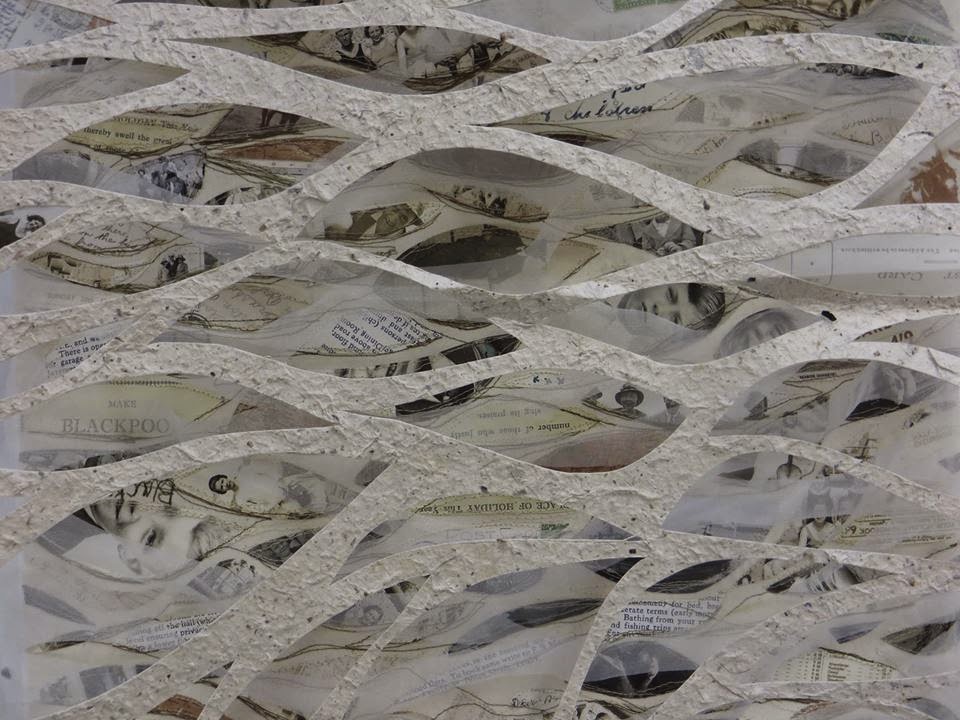
Local beaches (Blackpool, Southport, Morecombe, Formby) were where my Grandparents went on ritualistic family holidays. The photograph above is such a precious image for me - my Grandma and her sister standing on the sand, adding a story to the rich history of  the British seaside. I wanted to find a way to capture the beauty of the physical layers of sand I photographed and the metaphorical layers of history and narrative, too. It was also really important for me to include personal aspects though my Grandma's photographs, which often feature in my work. 


This was my result - a layered textile and paper piece which I suspended to allow movement between the layers. The length of the project meant that working in clay wasn't really practical and even though I longed to do something familiar with a material I love, working with stitch was really interesting. I designed the first layer to be very visually rich - a textured surface brimming with treasured ephemera and old photographs. Gradually, these visual aspects fade out - reflecting the reality for seaside towns like Blackpool. It's hardly a top-tourist spot these days.  


The decline of seaside towns in the UK is something that's provoked my ideas in the past. At the time, I didn't realise that a piece I wasn't too pleased with would be a major stepping stone in my current design process. 

Thursday, 27 November 2014

The future of Craft education.

At the moment, I am working on my dissertation which will explore how ceramic education can be secured for future generations. I'm looking at the current state of ceramic education and exploring some of the possible reasons why ceramics courses are becoming seemingly less popular and certainly less available. 

Recently, the future of ceramic education has been thrown into doubt. The last decade has seen the majority of higher education ceramic courses closed or adapted into more general 3D or craft programmes. Not only this, with major changes to undergraduate fees in 2012-13, students are now faced with paying £9000 per annum. With all of these changes affecting prospective students, it is not surprising that ceramics is increasingly becoming a niche higher education market. 

My last blog post was written about the ceramic poppies at the Tower of London and how they have captured the public's attention and imagination. People were discussing ceramics in a positive way and I felt like finally, ceramics was getting the public recognition it deserved. However, on November 5th 2014, Falmouth University announced the closure of its Contemporary Craft degree. Ceramics was back in the news, but for negative reasons. Perhaps it's just me who thinks this is slightly ironic... 


This decision has caused dismay for students (shown protesting above) and the creative community, not just on a local level, but nationally too. 
The announcement has also come at a time when the Crafts Council have released information regarding their plans for the future of craft education in a recent publication, “An Education Manifesto for Craft and Making."


These visions and plans fill me with optimism for the future of my practice, yet the closure of another course with a ceramic element brings me back down to earth with a somewhat cynical bang. 

Thankfully, yesterday some of my optimism was restored when I visited a local school which took part in the Craft Council's "Firing Up" scheme. The project aimed to "re-fire" dormant kilns in the UK's secondary schools by teaming them with local Universities. UCLan, where I study was involved and this project is something which a lot of my dissertation research has been about. Yesterday, I met with the Head of Art who specialised in ceramics when he was at University. I interviewed him about the "Firing Up" scheme and his general thoughts about the future of ceramic education. 


The ceramic work from the school was generally fantastic. Seeing the classrooms lined with clay creations (such as the one shown above) was so encouraging. But there was one particular thing I was drawn to - a collection of work from a student who is visually impaired. This particular student was desperate to do art - being able to use clay has made this possible for him. He is the first pupil at the school to study for a ceramics GCSE. Some of his beautiful, tactile pieces are shown below.


I have aspirations to teach and currently, the future of the career I aspire to is in doubt. It was so inspirational and amazing to have my passion and love for a subject reaffirmed by another student. This, for me, truly confirms that is it fundamental for ceramics and crafts subjects to remain part of any education. 

To support Falmouth University's Contemporary Craft course, please take the time to sign this petition opposing the closure:
https://you.38degrees.org.uk/petitions/oppose-falmouth-university-closing-the-contemporary-crafts-degree


To read more about the Craft Council's Education manifesto, check out this link:
http://www.craftscouncil.org.uk/what-we-do/education-manifesto/

Finally, if you're interested in learning more about the success of the Craft Council's "Firing Up" scheme, this video is a must-see: